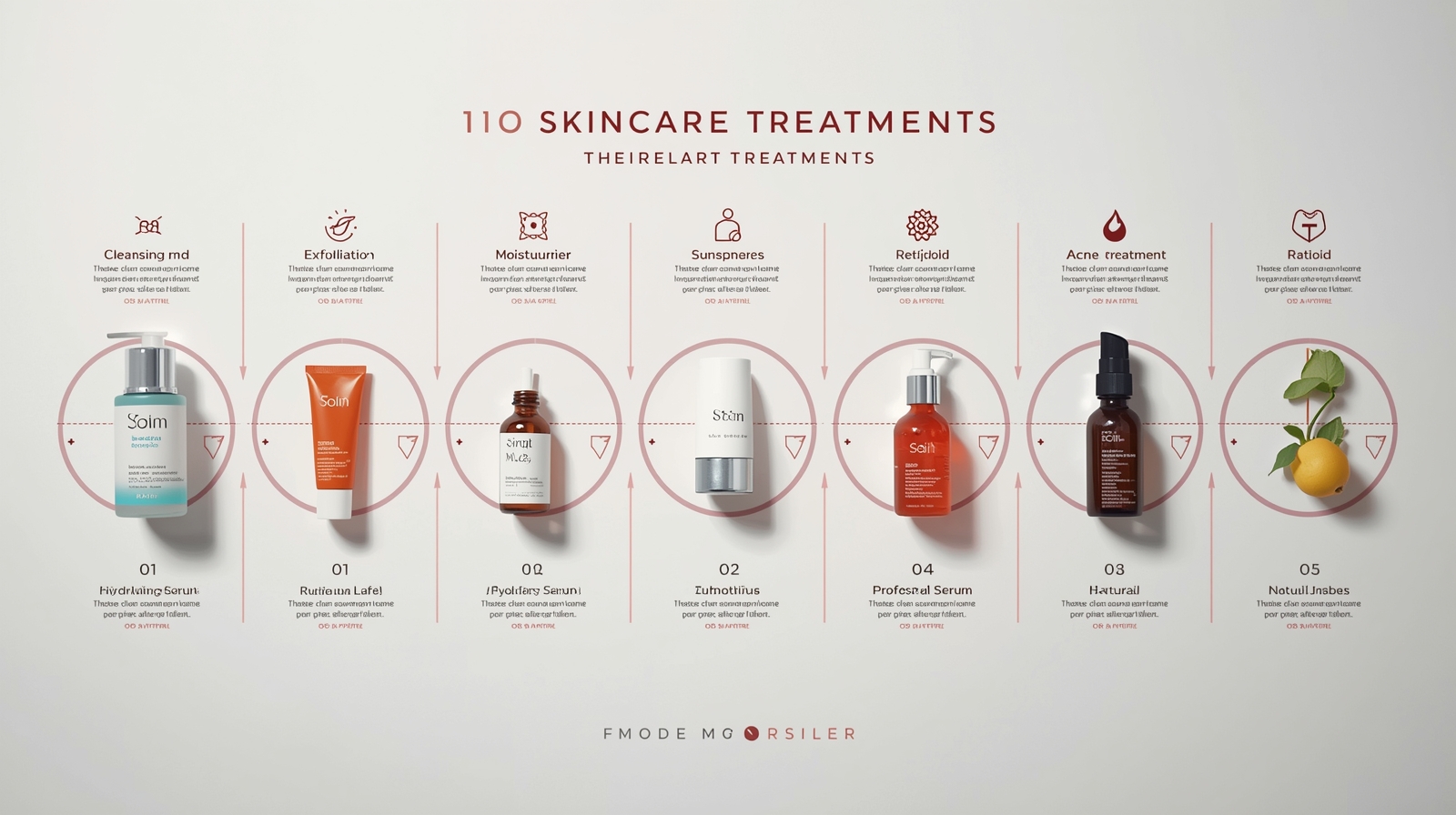
Maintaining clear and healthy skin requires consistent care, targeted treatments, and an understanding of the skin’s needs. Skincare treatments aim to improve barrier function, prevent breakouts, reduce surface buildup, and support overall skin health. This guide explains the top 10 skincare treatments, how they work, and how to incorporate them into daily routines.
Understanding Skin Health
Healthy skin performs several functions:
Barrier protection: Shields against environmental damage, bacteria, and pollutants.
Hydration regulation: Maintains moisture balance and prevents dryness.
Cell turnover: Supports removal of dead skin cells and renewal.
Immune response: Responds to irritants and pathogens to prevent infection.
Skincare treatments work by supporting these functions while addressing specific concerns such as acne, dryness, or uneven tone.
How to Choose Skincare Treatments
Selecting effective skincare treatments depends on:
Skin type: Oily, dry, combination, normal, or sensitive.
Skin concerns: Acne, pigmentation, texture, or barrier issues.
Product tolerance: Sensitivity to actives such as acids, retinoids, or vitamin C.
Routine consistency: Daily care supports long-term skin health.
A proper combination of treatments helps achieve clear and healthy skin.
Top 10 Skincare Treatments
- Cleansing
Cleansing is the first step in any skincare routine. It removes dirt, oil, sweat, and environmental pollutants.
How It Works
Removes debris from the skin surface.
Prevents clogged pores and breakouts.
Prepares skin for treatments and moisturizers.
How to Apply
Use a gentle cleanser suited for skin type.
Massage on damp skin for 30–60 seconds.
Rinse with lukewarm water.
Pat dry with a soft towel.
- Exfoliation
Exfoliation supports surface renewal and removes dead skin cells.
How It Works
Prevents clogged pores and comedones.
Promotes smoother surface texture.
Enhances absorption of serums and moisturizers.
How to Apply
Use chemical exfoliants (AHAs or BHAs) 1–3 times per week.
Avoid physical scrubs with harsh abrasives.
Follow with hydrating serum or moisturizer.
- Moisturization
Moisturizers maintain hydration and support the skin barrier.
How It Works
Prevents moisture loss.
Supports barrier function.
Reduces irritation from environmental exposure.
How to Apply
Apply a thin layer after cleansing and serums.
Use morning and night for consistent hydration.
Choose oil-free or lightweight formulations for oily skin.
Use richer creams for dry or sensitive skin.
- Sunscreen
Daily sunscreen protects the skin from UV damage.
How It Works
Prevents sunburn and UV-induced inflammation.
Reduces risk of pigmentation and surface damage.
Supports long-term skin health.
How to Apply
Apply broad-spectrum SPF 30 or higher every morning.
Cover face, neck, and exposed areas.
Reapply every 2–3 hours during sun exposure.
- Acne Treatments
Acne treatments reduce bacterial growth, inflammation, and clogged pores.
Common Ingredients
Benzoyl peroxide: kills acne-causing bacteria.
Salicylic acid: unclogs pores and exfoliates surface.
Niacinamide: reduces oil production and inflammation.
How to Apply
Apply to affected areas once or twice daily.
Start with lower concentrations to prevent irritation.
Follow with moisturizer.
- Retinoid Treatments
Retinoids support cell turnover and prevent clogged pores.
How It Works
Accelerates cell renewal.
Reduces formation of comedones.
Supports surface repair and minor texture improvements.
How to Apply
Apply at night to clean skin.
Use 2–3 times per week initially.
Combine with moisturizer to reduce dryness.
- Hydration Treatments (Serums and Essences)
Hydration treatments provide concentrated moisture and support barrier function.
Common Ingredients
Hyaluronic acid: retains water in the skin.
Glycerin: attracts moisture.
Panthenol: supports barrier function.
How to Apply
Apply after cleansing and before moisturizer.
Pat gently until absorbed.
Can be used morning and night.
- Pigmentation Treatments
Pigmentation treatments address dark spots, uneven tone, and minor discoloration.
Common Ingredients
Vitamin C derivatives: regulate melanin production.
Azelaic acid: reduces surface discoloration.
Niacinamide: supports even skin tone.
How to Apply
Apply serum or cream to affected areas.
Use consistently for 6–12 weeks for noticeable improvement.
Follow with sunscreen during the day.
- Professional Treatments
Professional treatments can accelerate results or target specific concerns.
Options
Chemical peels: remove surface buildup and stimulate renewal.
Microneedling: supports repair and collagen production.
Light or laser therapy: reduces bacteria, inflammation, or pigmentation.
How to Apply
Conducted by licensed professionals.
Follow aftercare instructions carefully.
Can complement home skincare routines.
- Natural & Home Treatments
Natural treatments can supplement routine care and provide targeted support.
Common Ingredients
Aloe vera: hydration and soothing support.
Honey: moisture retention and surface comfort.
Green tea extract: antioxidant and anti-inflammatory effects.
How to Apply
Use 1–3 times per week as a mask or topical treatment.
Patch-test new ingredients to avoid irritation.
Follow with moisturizer after application.
Building a Skincare Routine
Morning Routine
Cleanser
Hydrating serum or essence
Moisturizer
Sunscreen
Night Routine
Cleanser
Exfoliation or treatment (as needed)
Serum or retinoid
Moisturizer
Optional: Use professional treatments or masks 1–3 times per week depending on skin needs.
Layering Products Correctly
Apply from thinnest to thickest texture.
Water-based products first, then serums, creams, or oils.
Wait 1–2 minutes between actives and moisturizers.
Avoid combining strong actives unless tested for tolerance.
Adjusting for Skin Types
Oily Skin
Gel cleansers, lightweight serum, oil-free moisturizer.
Exfoliate 1–2 times per week.
Dry Skin
Cream cleanser, hydrating serum, rich moisturizer.
Nighttime masks 1–2 times per week.
Sensitive Skin
Gentle cleanser, barrier-support serum, fragrance-free moisturizer.
Avoid strong acids or retinoids initially.
Combination Skin
Balance lightweight products for T-zone and richer formulas for dry areas.
Layer based on hydration needs.
Common Mistakes to Avoid
Skipping sunscreen.
Over-exfoliating.
Layering incompatible active ingredients.
Using too many products at once.
Expecting immediate results.
Correct routine and consistency are more effective than frequent product changes.
Lifestyle Support for Clear Skin
Maintain clean pillowcases and towels.
Drink water to support hydration.
Avoid touching the face frequently.
Follow a balanced diet to support overall skin health.
Manage stress to prevent flare-ups.
Tracking Progress
Initial improvements: 2–4 weeks.
Surface clarity and texture: 6–8 weeks.
Long-term barrier support and even tone: 12 weeks or more.
Monitor skin response and adjust treatments as needed.
Summary of Top 10 Treatments
Treatment Purpose How to Use
Cleansing Remove debris Daily, morning and night
Exfoliation Remove dead cells 1–3x/week
Moisturization Hydration & barrier Daily, morning and night
Sunscreen UV protection Daily, morning
Acne Treatments Reduce breakouts 1–2x/day
Retinoids Cell turnover Night, 2–3x/week initially
Hydration Serums Moisture Daily
Pigmentation Treatments Dark spots & tone Daily, follow sunscreen
Professional Treatments Accelerate results Licensed professional
Natural Treatments Supplement routine 1–3x/week
Final Thoughts
Clear and healthy skin requires consistent care, targeted treatments, and knowledge of the skin’s needs. Integrating cleansing, hydration, barrier support, and treatment products into a structured routine ensures measurable results. Professional and natural treatments can supplement daily care, while correct layering, sun protection, and monitoring progress enhance overall skin health.
